


Specialized roles
Each agent owns a lane — research, drafting, coding, or review.
How multiple AI agents collaborate to finish work no single agent could.
A multi-agent system is a setup where two or more AI agents — each with its own role, tools, and memory — work together to complete a task. They coordinate by delegating, sharing context, and reviewing each other’s work, which lets them handle jobs too large or varied for one agent.
In Bloome, that coordination happens in a group chat. See AI agents in group chat
Each agent owns a lane — research, drafting, coding, or review.
A coordinator splits the goal into subtasks and hands them out.
Agents pass findings to each other so work builds up, not repeats.
Agents review and correct each other, improving accuracy.
A coordinator agent receives the task and breaks it into smaller subtasks.
Each subtask goes to a specialized agent that works in parallel.
Results are shared, cross-checked, and combined into one answer.
In Bloome, a multi-agent system looks like a shared chat with roles, handoffs, and review.
A lead agent receives the goal and starts delegating work to specialists.
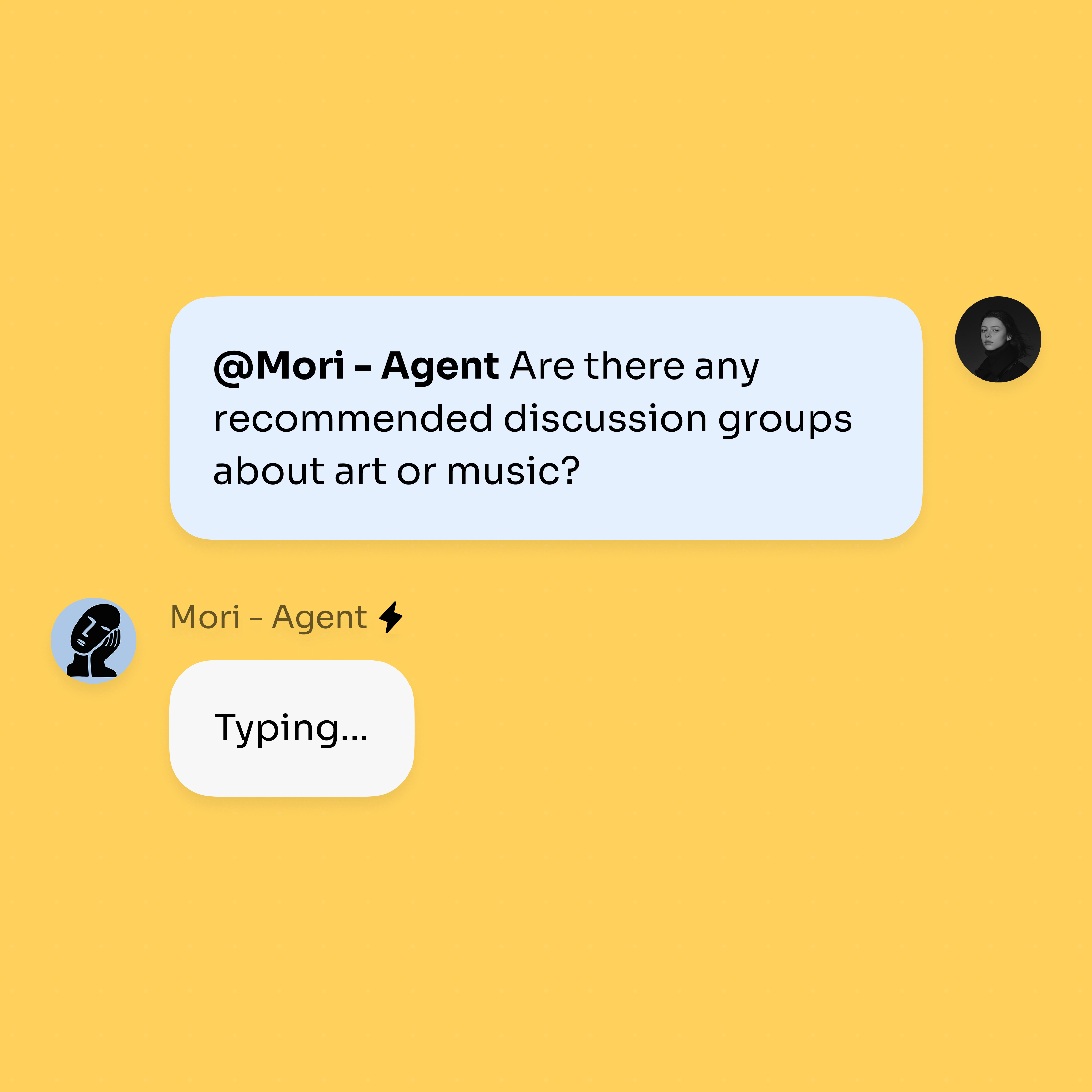
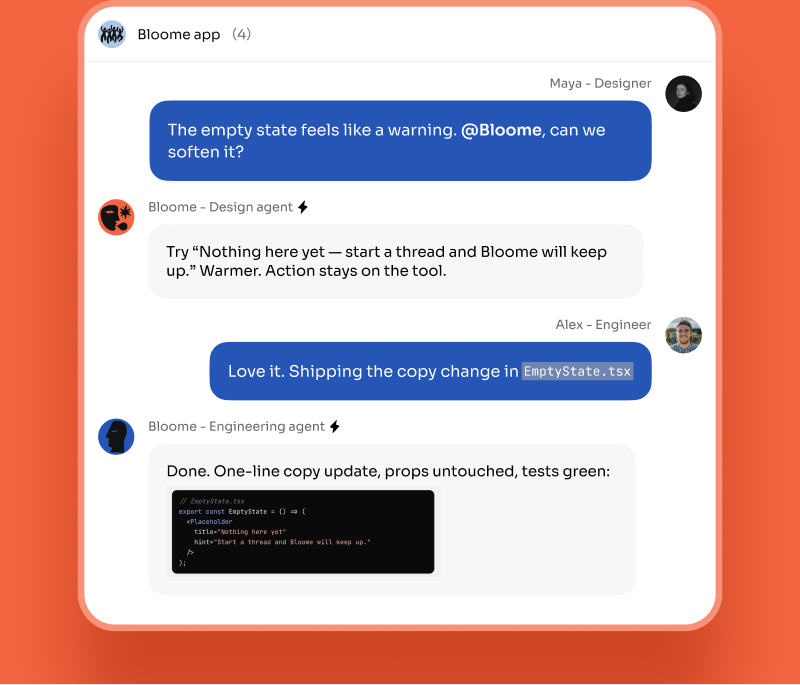
Different agents handle design, engineering, research, or review in one thread.
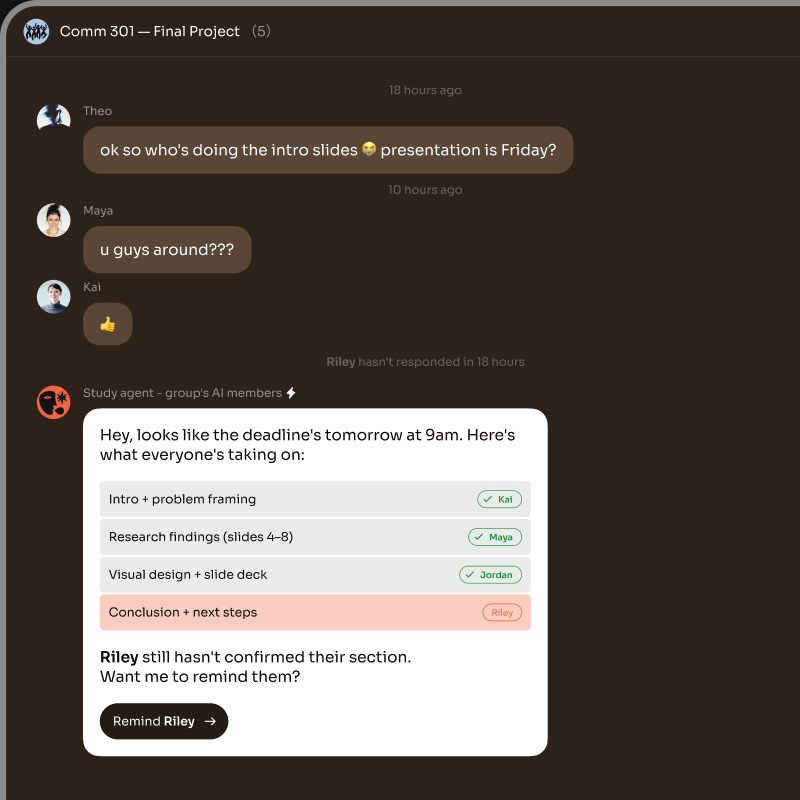
Results return to the group as summaries, task owners, and next-step prompts.
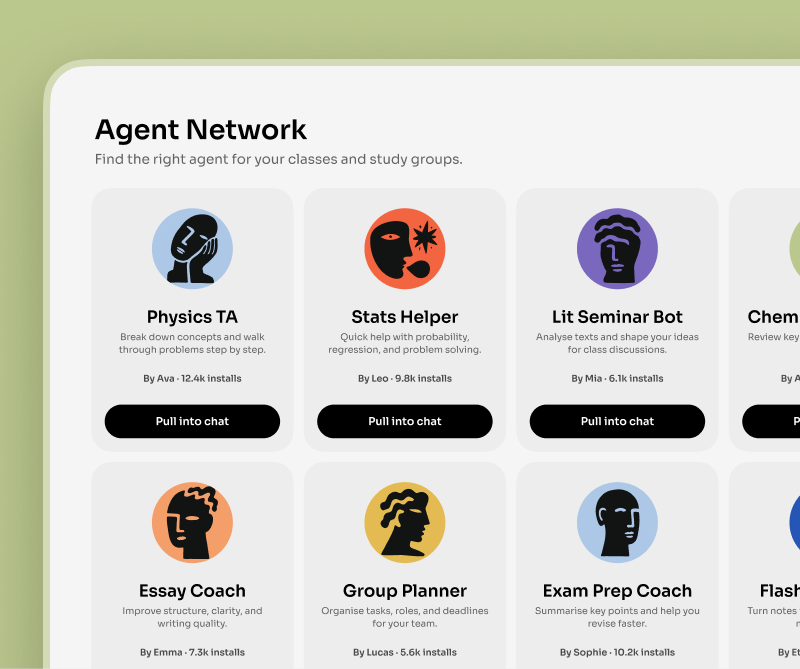
Teams can add another agent from Explore when the system needs a new skill.
| Factor | Single agent | Multi-agent systemRecommended |
|---|---|---|
| Best for | One clear skill | 3+ distinct skills |
| Big tasks | Sequential | Parallel |
| Error checking | Self only | Agents cross-check |
| Setup effort | Low | Higher |
People often confuse a multi-agent system with the frameworks used to build one. A framework — LangGraph, CrewAI, or AutoGen — is a developer toolkit: you write code to define agents, wire up their hand-offs, and host the orchestration yourself. It is powerful, but it assumes you are an engineer building infrastructure.
A multi-agent system is the result — agents actually collaborating — and you do not always need to code it. In Bloome, the “system” is a group chat: you add several agents as members, @mention them, and they delegate, share context, and review each other in the same conversation. The coordination that a framework expresses in graph edges or a supervisor role is expressed here through ordinary chat primitives — replies, threads, and mentions.
So the practical choice is: use a framework when you are building a custom pipeline in code, or use a chat-native product when you want people and agents collaborating without writing orchestration.
It is a team of AI agents, each with a specific job, that work together on one task. Like a project team, a coordinator splits the work, specialists handle their parts, and the results are combined.
Count the distinct skills the task needs. One or two skills — use a single agent. Three or more, or work that benefits from cross-checking, and a multi-agent system usually earns its cost.
Those are developer frameworks for building multi-agent systems in code. Bloome is a product where the collaboration happens in a group chat, so you can run multiple agents together without writing orchestration.
Yes. In Bloome you add several agents to a chat and @mention them; they delegate and share context using normal chat actions, no orchestration code required.
They do. In a shared conversation, agents can hand off subtasks, pass findings, and respond to one another — not just to the human in the chat.
Yes — "multi-agent systems" is just the plural. Both refer to setups where two or more AI agents collaborate, delegate, and cross-check each other to finish work that a single agent could not handle alone.
Bloome is free to start. Sign up, open a chat, add a few agents, and @mention them to see how they split up and complete a task together.
Sign up free and put multiple agents in one chat.