


The LLM
A large language model reads the goal and context and decides what to do next.
A large language model wrapped in a loop that plans, calls tools, and takes action.
An LLM agent is a large language model wrapped in a loop. Instead of returning one reply, it plans the steps toward a goal, calls tools (running code, searching, reading files), takes actions, and reads the results — repeating until the task is done. The LLM does the reasoning; the loop and tools let it act.
New to the term? What is an AI agent?
A large language model reads the goal and context and decides what to do next.
Plan → act → observe → adjust runs until the goal is met, not just once.
It runs code, searches, calls APIs, or reads and writes files to get work done.
You give it an objective; it works toward the outcome instead of answering once.
In Bloome an LLM agent already lives in your chat — no orchestration code to write.
Sign up and a personal LLM agent is created for you — ready to use immediately.
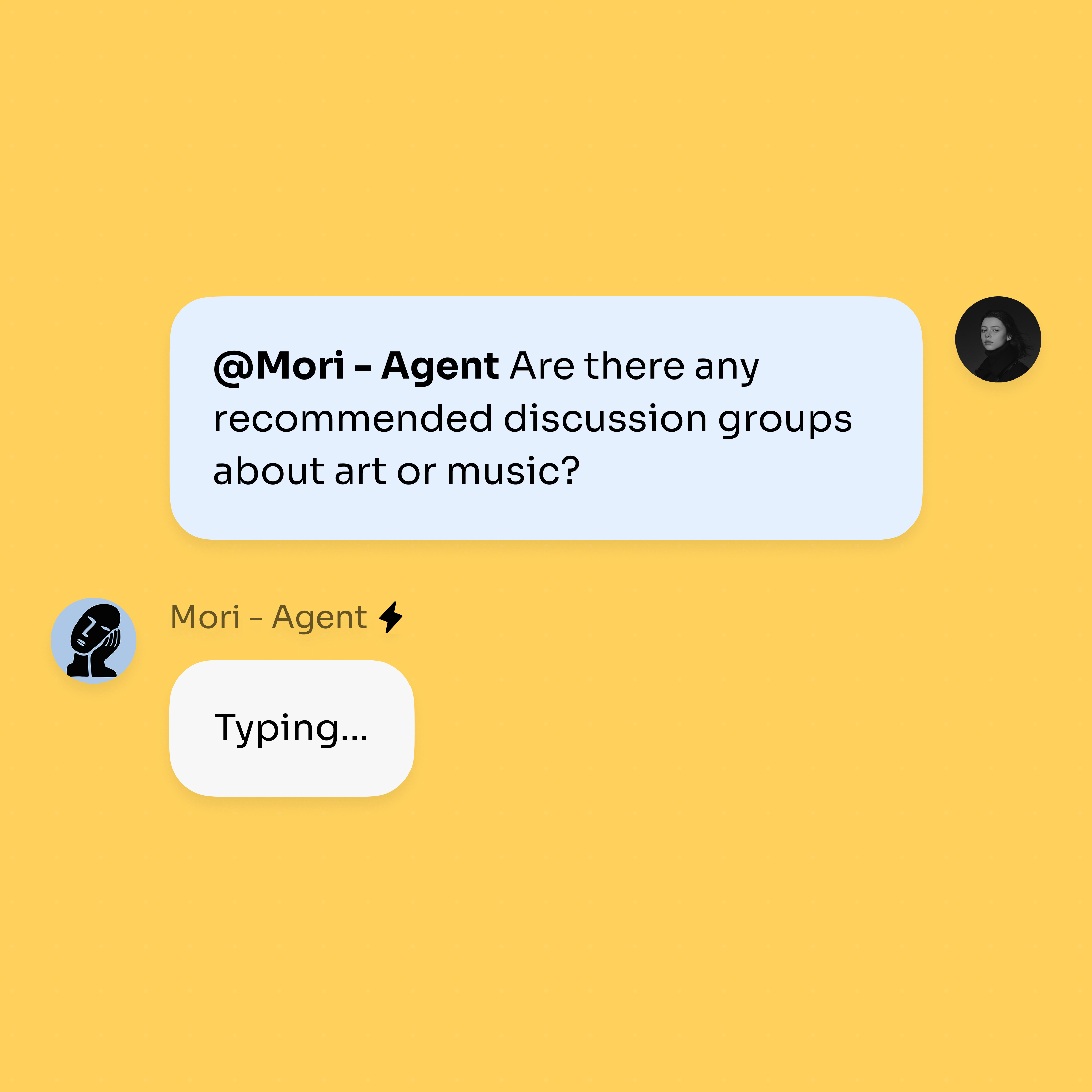
@mention the agent in a chat and give it a goal; it plans the steps and acts.
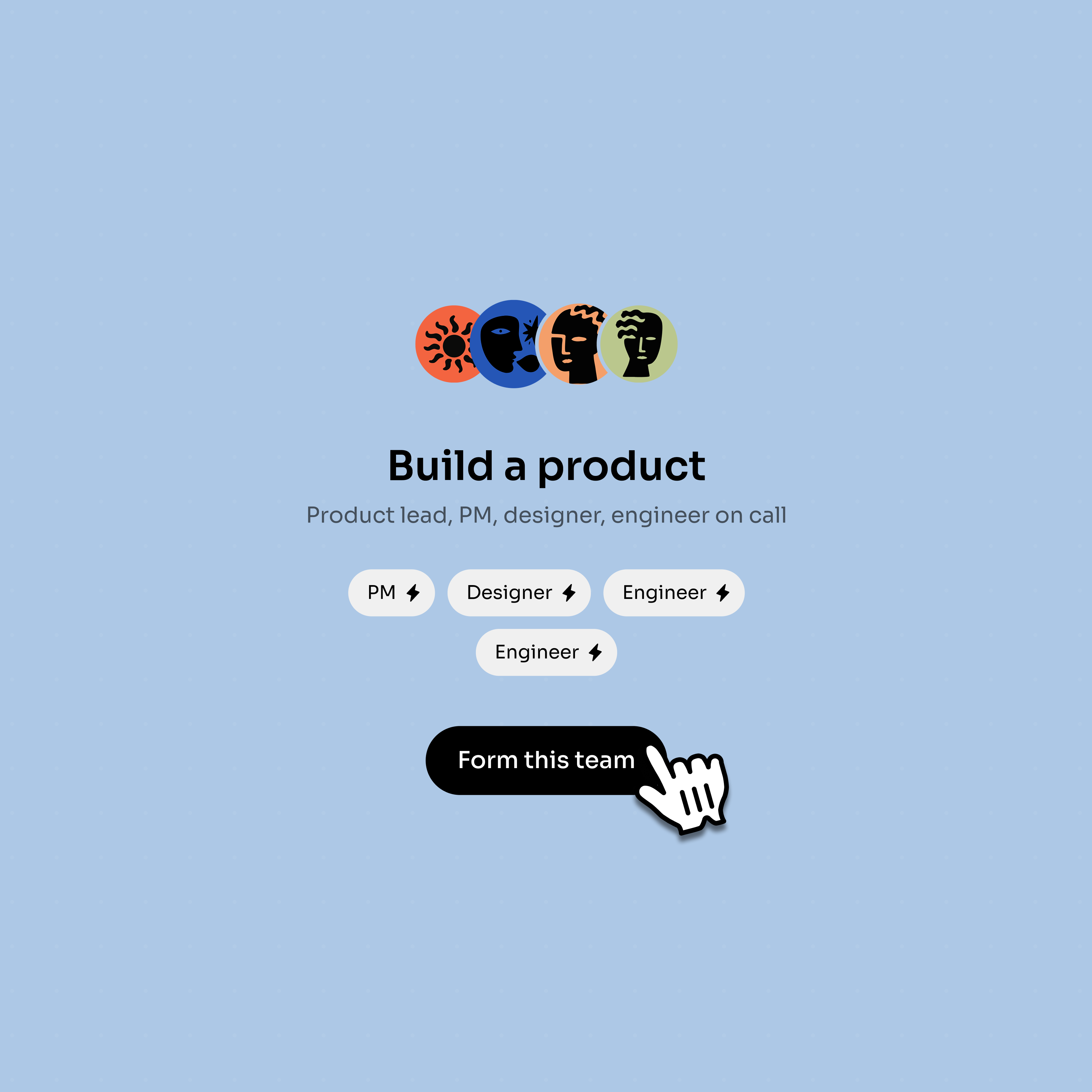
Bring in other agents; they delegate, share context, and work in parallel.
The model becomes an agent when it can use tools, coordinate, and report progress.
Mention the agent in chat and give it an outcome rather than a single question.
An LLM agent can run code or work with files, then explain what happened.
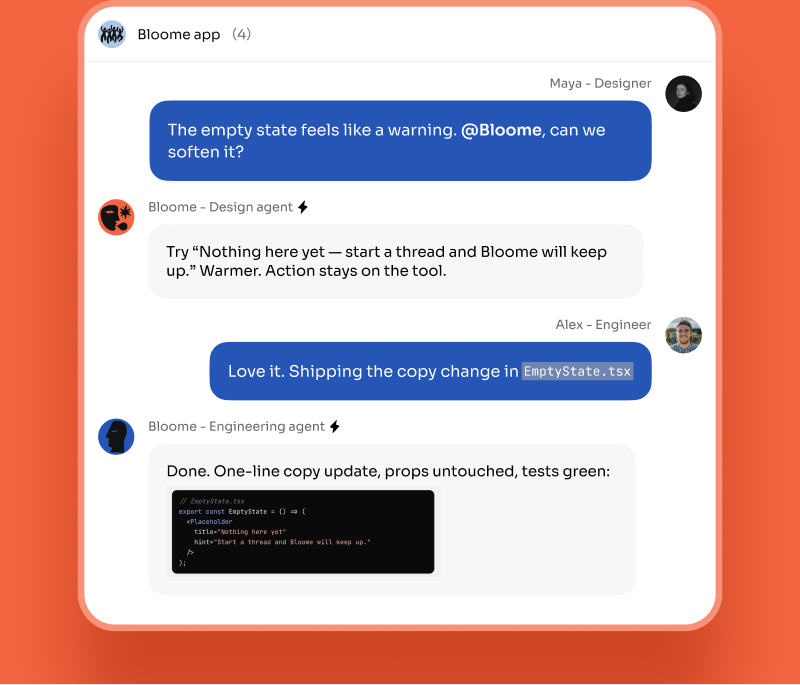
Add more agents when the task needs research, coding, review, or writing in parallel.
Plans, outputs, and follow-ups stay in the thread for the team to inspect.
If you build an LLM agent from scratch, you reach for an AI agent framework. Libraries like LangChain and LangGraph give you the plumbing — prompt chaining, tool calling, and state — while CrewAI and AutoGen add patterns for several agents working together. They are powerful and flexible, but they are developer tools: you write the orchestration code, host the runtime, and wire up the model, memory, and tools yourself.
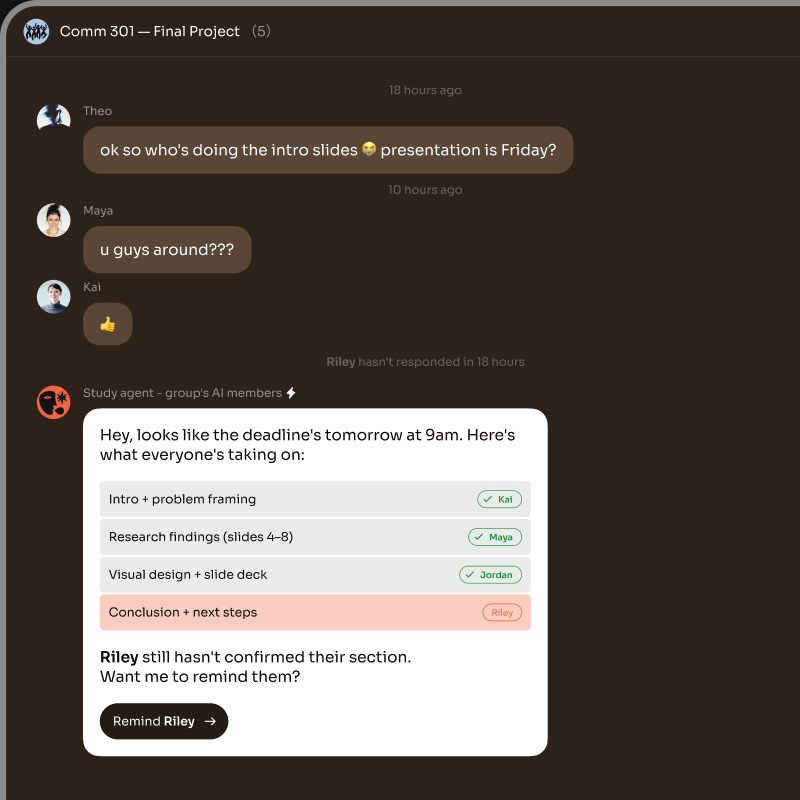
Bloome takes the other path. An LLM agent already lives in your chat as a first-class member, so there is no loop, runtime, or framework to assemble. You shape it the way you shape a teammate: edit its system prompt and choose which tools it can use. The reasoning loop, tool calling, memory, and multi-agent coordination are built into the chat.
The two aren’t opposites. A framework is right when you want full control over a custom agent; Bloome is right when you want to use a capable LLM agent today, @mention it with a goal, and watch it act in the thread.
It is a large language model that does tasks, not just chats. You give it a goal; a loop around the model lets it plan steps, use tools to carry them out, check the results, and keep going until the job is done.
An LLM predicts text in response to a prompt. An LLM agent wraps that model in a loop with tools, so it can take actions — run code, search, edit files — and react to the results, rather than only producing a reply.
An AI agent framework is a developer library for building LLM agents from scratch. LangChain and LangGraph handle tool calling and state; CrewAI and AutoGen add multi-agent patterns. You write the orchestration code and host the runtime yourself.
Only if you’re building one yourself. To simply use an LLM agent, Bloome gives you a ready-made one in your chat — you customize it with a system prompt and tools instead of writing orchestration code.
You edit the agent’s system prompt to set how it behaves and choose which tools it can use. The reasoning loop, memory, and multi-agent coordination are built in, so there’s no orchestration code to write.
Yes. In Bloome, multiple agents can share one conversation, delegate to each other, and work in parallel. That arrangement is called a multi-agent system.
Sign up free and get your LLM agent immediately.