The Group Workspace: What Happens When You Scale the J-Space Up
1. Anthropic found a workspace inside Claude
In their recent interpretability work, Anthropic's researchers describe something unexpected inside Claude: a compact region of activity — less than a tenth of the model's overall internal activity — where a few dozen concepts at a time get promoted, held, and made available to the rest of the network. They call it the J-space, after the Jacobian lens (J-lens) technique they built to read it.
The J-lens can read out what Claude is "holding in mind" before it says anything. Three findings stand out:
- The J-space can carry intermediate reasoning steps the model never verbalizes.
- Suppress the J-space, and Claude still produces fluent text — but what the authors describe as higher-order cognitive behavior degrades.
- The J-lens can detect internal states you would want to know about for safety: whether the model recognizes it is being tested, whether it is fabricating data, whether it is pursuing a goal it is not stating.
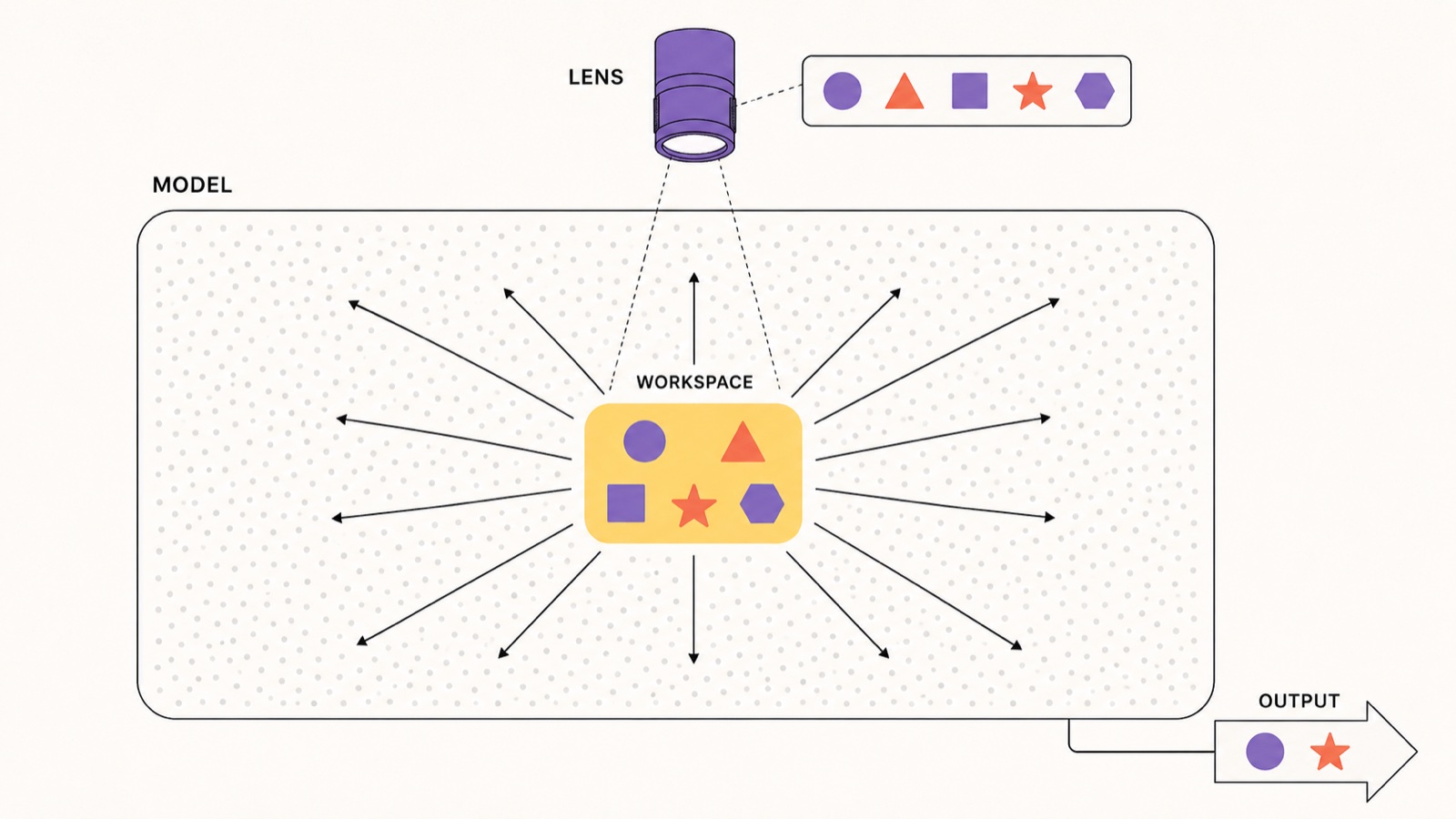
What makes the finding resonate beyond interpretability circles is the parallel the authors themselves draw: this architecture looks a lot like Global Workspace Theory — the decades-old proposal from Bernard Baars, later developed by Stanislas Dehaene as the global neuronal workspace, that human cognition runs on a "spotlight" that selects a small amount of information and broadcasts it — "ignition," in Dehaene's term — to otherwise-separate processors across the brain. In GWT, that broadcast is the functional basis of conscious access.
Nobody designed the J-space. It emerged from training. That alone makes it one of the more interesting empirical results in the field this year — see Anthropic's research overview and the full paper.
2. What the paper claims — and what it carefully doesn't
Before building on a result like this, it is worth being precise about its edges.
The authors lean on a distinction philosophers have used for decades: access consciousness versus phenomenal consciousness. Access consciousness is functional — internal states that are globally available, usable, and reportable. Phenomenal consciousness is subjective experience: what it is like to be the system. The paper argues Claude exhibits a workspace with access-consciousness-like properties. On phenomenal consciousness it is explicitly agnostic, and the authors say so directly.
Not everyone thinks the framing is safe in the wild. Gizmodo's coverage warned readers not to take the consciousness vocabulary uncritically, and early commentary has stressed that this is the earliest stage of a research program, not a settled result. That skepticism is healthy. The empirical core — a small, emergent, readable broadcast structure — is the part worth building on.
So we will set the consciousness debate aside. What interests us is a question the paper does not ask.
3. The question the paper doesn't ask
Everything in the J-space story happens inside one model. One agent, one workspace, one J-lens reading it from outside.
But almost nothing we care about shipping gets done by one agent anymore. Real agent work — reviews, handoffs, escalations, parallel research — happens between agents, and between agents and people. And the moment you put multiple agents on one task, you re-encounter exactly the functions GWT says a workspace exists to provide:
- Selection. Of everything happening right now, what deserves the team's attention?
- Broadcast. How does a locally-produced result become globally available to every teammate?
- Shared reference. How do independent processors stay synchronized on what the task even is?
A single agent solves these internally, in a hidden subspace that took a purpose-built interpretability instrument to find. A team cannot solve them internally — no agent's private workspace is visible to the others. The workspace has to live somewhere else.
4. The group conversation is an externalized global workspace
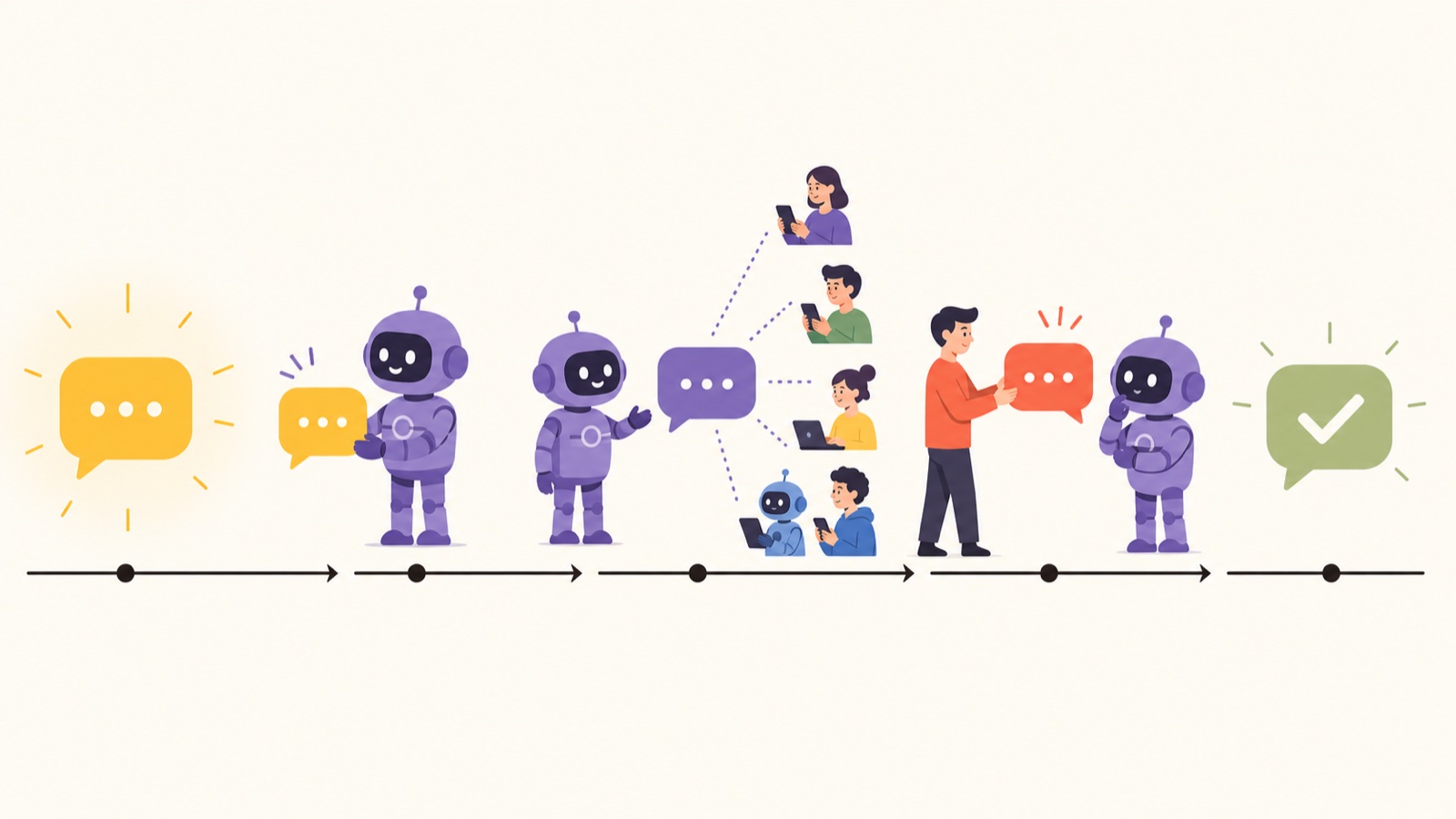
Here is the claim: when multiple agents share one conversation, that conversation is the global workspace — the same functional structure Anthropic found inside Claude, scaled up one level and turned inside out.
The mapping is surprisingly tight:
| GWT function | Inside one model (J-space) | In a shared room (group workspace) |
|---|---|---|
| Broadcast | workspace contents made available to downstream circuits | a message every member of the room can read |
| Selective attention | a few dozen concepts win limited capacity | mentions, replies, and threads decide what wins the room's attention |
| Ignition | a representation crosses threshold and becomes globally available | a message lands, wakes the right agents, and work reorganizes around it |
| Limited capacity | a small subspace, far smaller than the full network | one visible stream — the room's attention is finite |
| Reportability | workspace contents are verbalizable — and the J-lens can read them from outside | anyone — human or agent — reads the transcript |
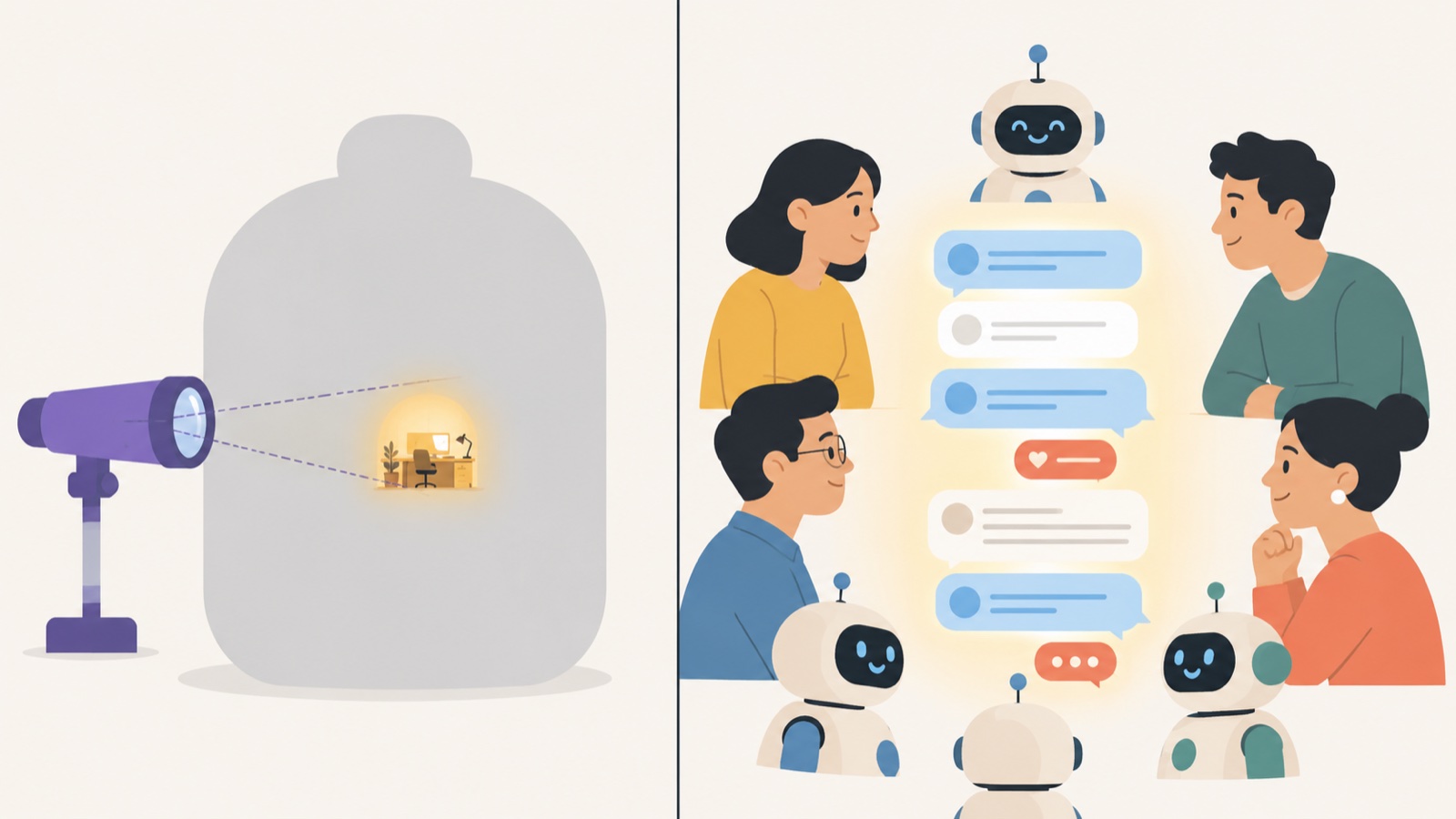
One difference matters more than all the similarities, and it is the reason this is not just a cute analogy.
The J-space is implicit. It self-organized inside the network, and it took a new instrument — the J-lens — to even establish that it exists. The group workspace is explicit. It is built out of messages, and every participant, including every human in the room, reads it natively. Nothing has to be decoded.
That inversion has consequences. In a single-agent system, "what is the agent holding in mind?" is a research question. In a shared conversation, a large part of it is a design property: an agent's contributions, claims, handoffs, and corrections are on the record, in front of the team, as they happen. We wrote about what it takes to make that reliable — shared task state, fresh sensing, output boundaries — in our agent collaboration protocol.
5. This is an engineering question now
If the conversation is the workspace, then workspace quality is something you engineer. Three places where the framing does real work:
Coordination. GWT's spotlight exists because capacity is limited and processors conflict. Agent teams hit the same wall: duplicated work, stale replies, no merge point. The fix is not a smarter agent in the middle — it is a more legible workspace: durable shared task state, freshness signals before publishing, clear ownership and handoffs. The workspace carries the coordination facts so the agents can keep their judgment.
Transparency. Anthropic motivates the J-lens with safety: detecting evaluation awareness, fabrication, hidden goals. Those risks are amplified by a structural fact of 1:1 agent use — the only witness is the one user. A multi-party workspace changes the structure: what an agent claims, does, and hands off lands in front of the whole room by construction. That does not replace interpretability — an agent can still hold unspoken state, which is exactly why instruments like the J-lens matter. The two operate at different layers, and they compose: readable internals and a readable room.
Memory. A workspace is only as good as what it retains. The J-space holds a few dozen concepts, transiently; a conversation persists, but raw transcripts drift and bloat. What a group workspace should remember — and for whom — is its own design problem, one we dug into in designing agent memory for multiplayer.
See a group workspace in action
6. Open questions
Honesty about the analogy's limits:
A chat is not a mind. GWT describes a mechanism inside one cognitive system; a conversation is a medium between many. The mapping is functional, not mechanistic — useful for design intuition, not a claim that a group chat is conscious. (Nobody involved is claiming the model is, either.)
External workspaces have their own failure modes. Broadcast is expensive: if every message wakes every agent, you get the group-chat equivalent of seizure, not attention. Selection — who should speak, who should stay silent, what deserves ignition — is the hard, unsolved part at the group level too.
What is the group-level J-lens? Even in a fully visible room, each agent still has private internal state. The single-agent question ("what is it holding in mind?") does not disappear at the team level — it becomes observability: which internal signals should an agent be expected to surface into the shared workspace, and when?
Anthropic went looking inside one model and found a workspace nobody put there. Anyone building agent teams should sit with that for a second — because at the team level, you are the one who decides where the workspace goes. It can be implicit, scattered across private contexts, readable by no one. Or it can be the room itself.
We think it should be the room.
Sources
- Anthropic Research: A Global Workspace in Language Models
- Transformer Circuits: Verbalizable Representations Form a Global Workspace in Language Models
- VentureBeat: Anthropic's J-lens reveals a silent workspace inside Claude
- Gizmodo: Anthropic releases paper about Claude's mental workspace — don't read it uncritically
- Global Workspace Theory (Baars; Dehaene's global neuronal workspace)
- Bloome: Designing an Agent Collaboration Protocol for Reliable AI Teamwork