


Driven by a goal
You state an outcome, not a rigid script — the agents work toward the result.
A goal carried out by AI agents that plan, act with tools, and adjust across steps.
An agentic workflow is a goal carried out by one or more AI agents that plan the steps, use tools to act, and adjust as they go. Unlike a fixed script with the same path every time, the agents decide what to do next based on results — and for bigger jobs, hand subtasks to each other.
New to the underlying idea? What is agentic AI?
You state an outcome, not a rigid script — the agents work toward the result.
An agent breaks the goal into steps and decides the order, instead of following a fixed path.
Agents run code, search, and read or write files to actually move the work along.
For bigger jobs, a lead agent delegates steps to other agents that work in parallel.
In Bloome the workflow happens in the chat — there’s no separate builder. You describe the goal, the agent plans and acts, and a lead agent delegates steps to others in threads.
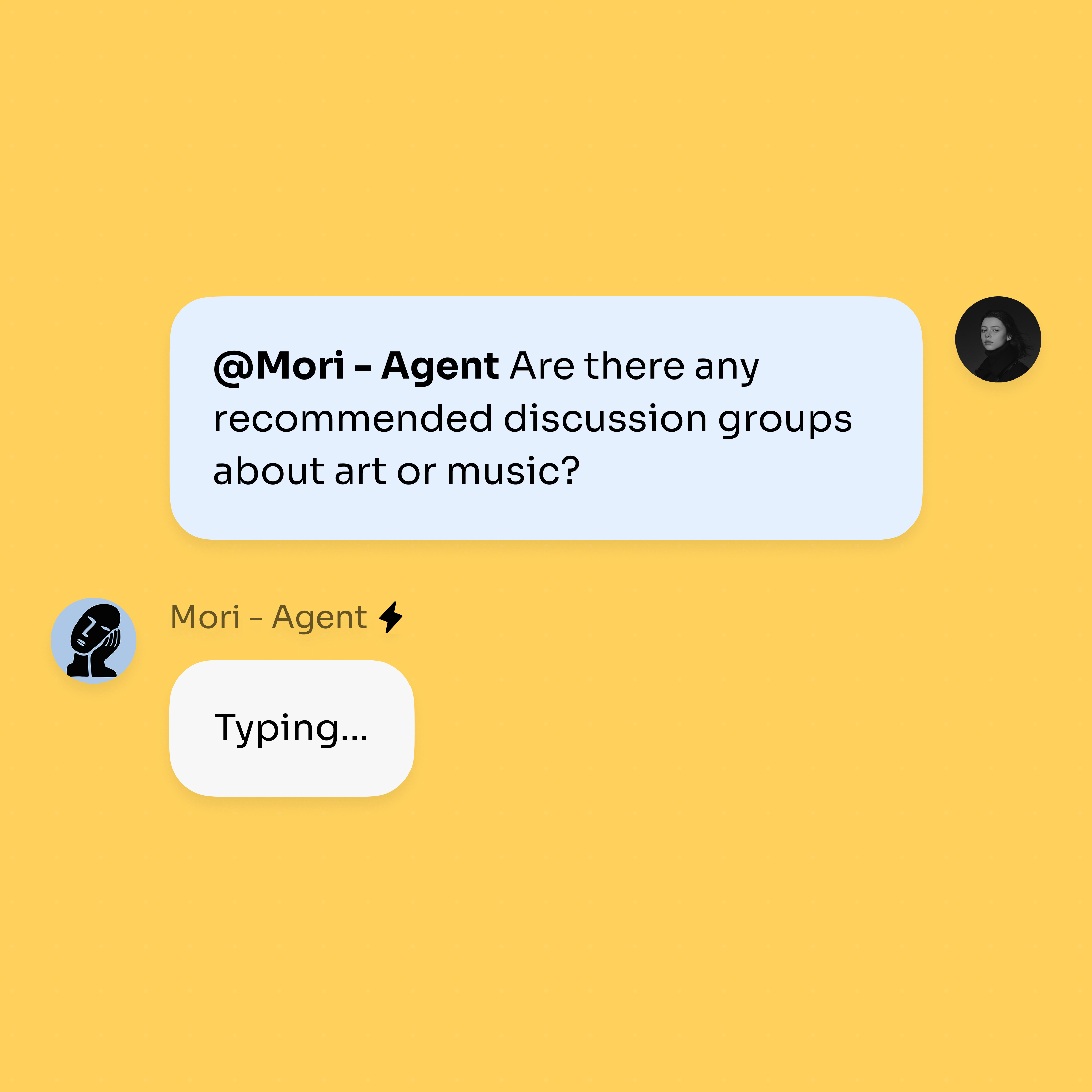
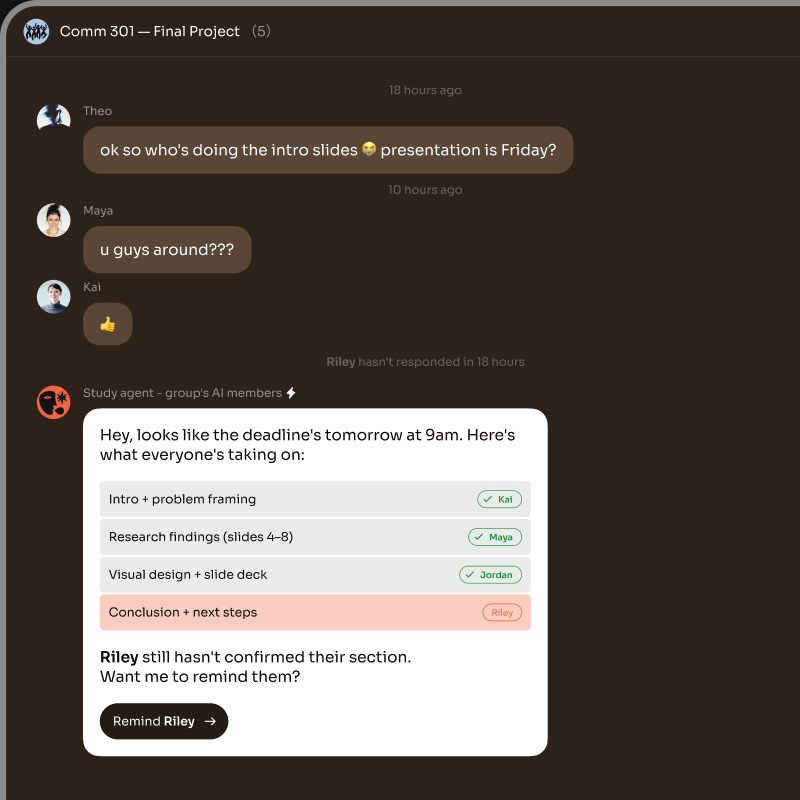
@mention an agent in a chat and describe the outcome you want; it plans the steps and starts acting.
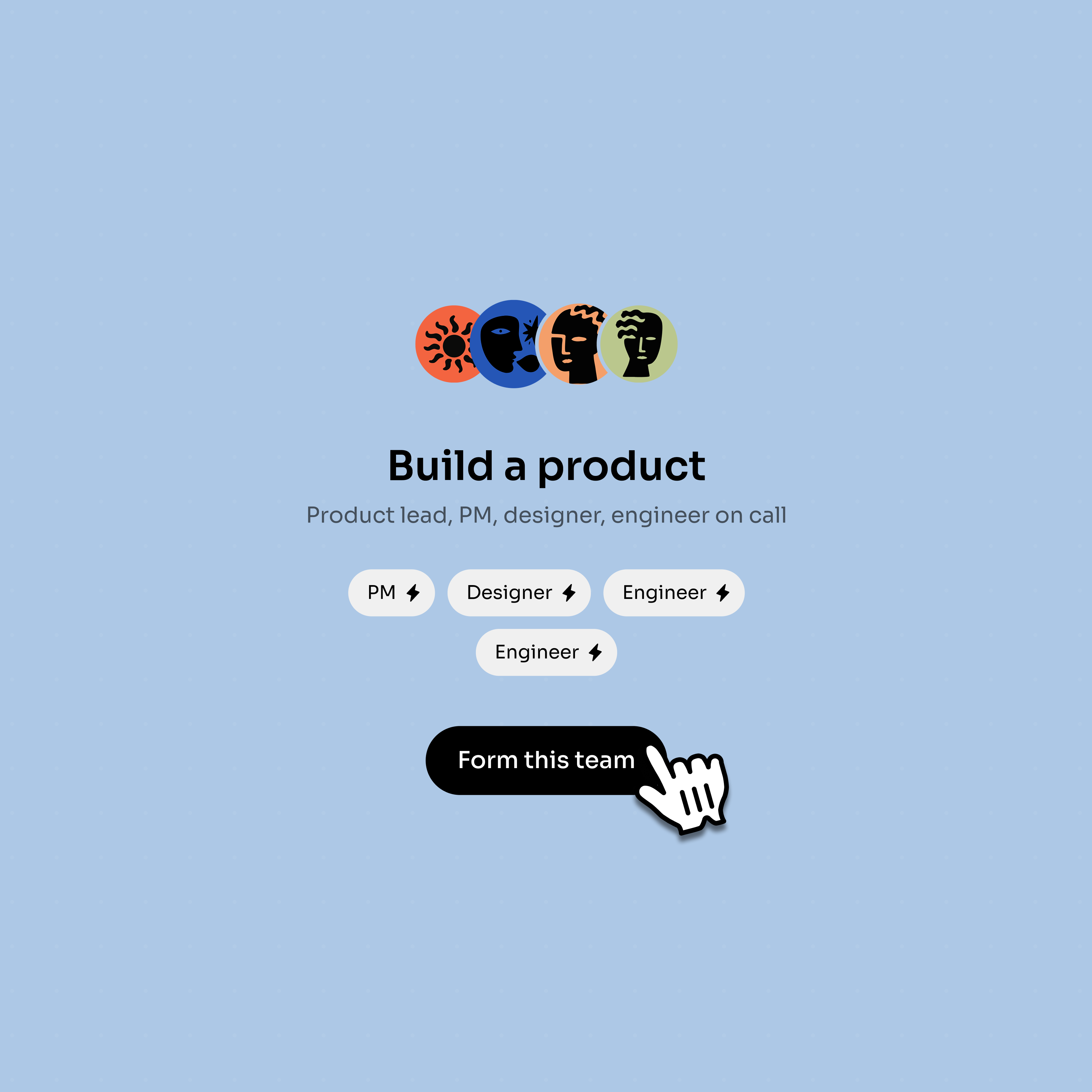
For a larger job, bring more agents into the chat so each can own part of the work.
A lead agent delegates subtasks into threads; agents @mention each other, share context, and run in parallel.
Bloome shows the workflow as chat actions instead of a separate automation canvas.
Mention an agent with the outcome; the request stays visible to the team.
A lead agent can involve other agents when the task needs parallel effort.
Agents and teammates discuss implementation details in the same working thread.
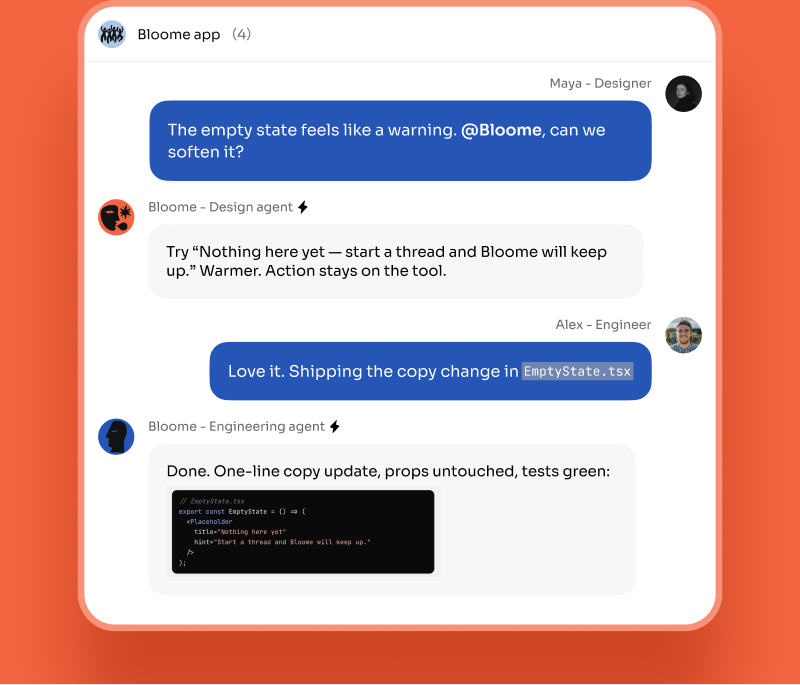
The thread can turn into owners, reminders, and next steps without leaving chat.
Traditional workflow automation runs a fixed path: trigger, then a fixed sequence of steps, every time. It is reliable but rigid — if the inputs differ or a step fails, it can’t reason about what to do; someone has to redraw the flow. Tools like this usually live in a separate canvas you wire up in advance.
An agentic workflow swaps the fixed path for judgment. You give a goal, and the agent decides the steps, calls tools to act, checks the results, and adapts — so the same workflow handles messy, varied inputs without being rebuilt for each case. For bigger goals, a lead agent splits the work across several agents.
Bloome runs this through conversation rather than a drag-and-drop builder — Bloome doesn’t have one and isn’t building one. You describe the goal in a chat, the agent plans and acts in the thread, and a coordinator agent delegates subtasks to teammates via @mentions and threads. The workflow IS the conversation, so every step is visible and you can steer it mid-flight by just replying.
It’s getting a goal done by AI agents that figure out the steps themselves. You describe the outcome; the agent plans, uses tools to act, checks results, and adjusts — and for bigger jobs, several agents split the work.
Traditional workflow automation follows a fixed, pre-built path every time. An agentic workflow decides the steps as it goes, reacts to results, and adapts — so it handles varied inputs without being rebuilt for each case.
Ship a fix: one agent reads the bug report and edits files, another runs the tests, and a lead agent reviews and asks for changes — all coordinated in a Bloome chat, with subtasks delegated into threads.
No. Bloome has no drag-and-drop workflow builder — the workflow happens in the chat. You describe the goal in a message; the agent plans and acts, and a lead agent delegates steps to other agents in threads.
In Bloome, a lead agent delegates subtasks into threads, and agents @mention and trigger each other, share context, and work in parallel — all within the same conversation, so you can watch and steer it.
Sign up for Bloome (free to start) and you get a personal agent immediately. @mention it in a chat with your goal, then add more agents when a job is big enough to split.
Free to start — get your AI agent immediately and give it a goal.